Utility Water Cooling Circuit Reliability Improvement
Project Background
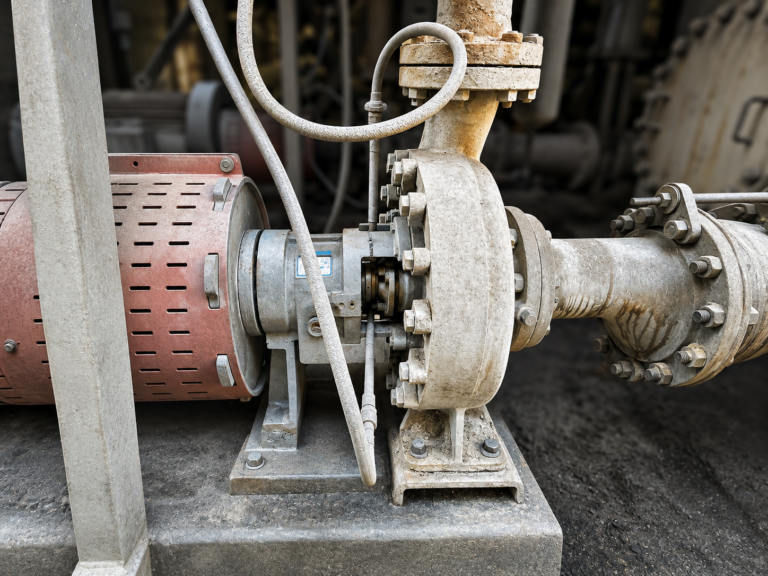
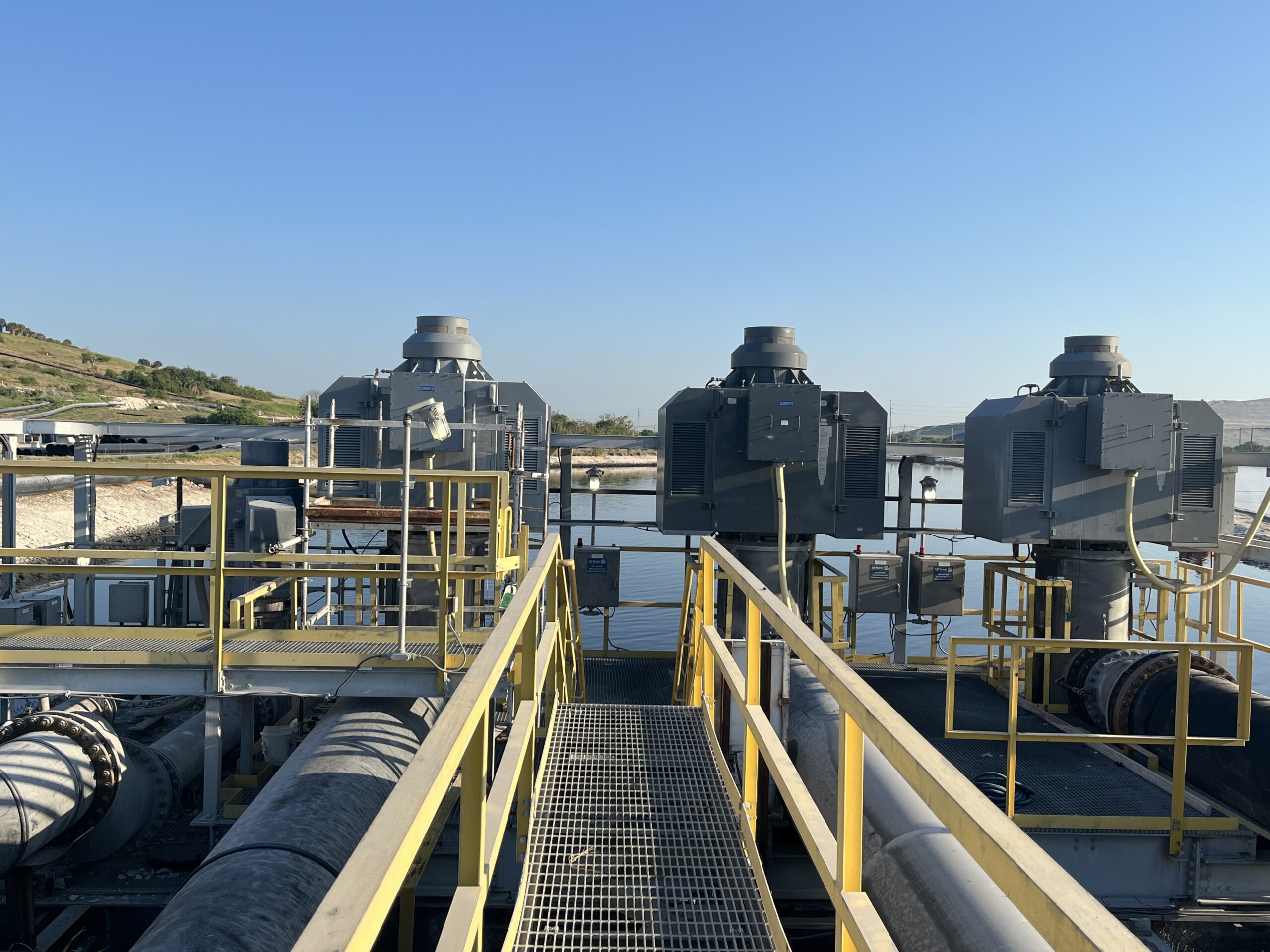
An earlier utility water cooling system improvement project introduced two critical circuits with limited operational redundancy: the cold water supply to plant cooling water users (Pump 2) and the makeup water supply to the byproduct slurry re-pulp tank (Pump 1). Each circuit relied on a single dedicated pump, with neither an installed standby pump nor a warehouse spare.
Figure 1 — Original Utility Water Distribution Configuration
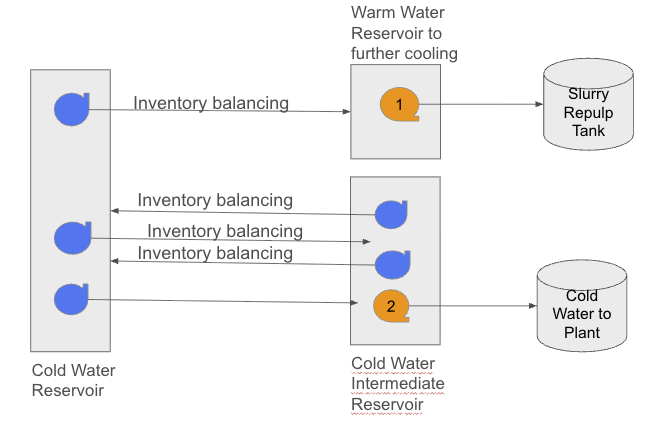
Installing replacement or additional pumps would require substantial capital investment, including new pumping equipment, pump platforms, and electrical infrastructure.
The lack of redundancy created significant operational vulnerability. Mechanical issues, including excessive pump vibration and motor overload, had previously caused unplanned shutdowns. Failure of the slurry re-pulp water supply pump could result in a complete production shutdown, while failure of the cold water supply pump could result in a potential 25–50% reduction in daily production during the warmer months.
Engineering Challenge
The primary engineering challenge was to introduce operational redundancy into two critical utility water circuits while minimizing capital expenditure and modifications to the existing infrastructure.
The design needed to maximize the reuse of existing pumps, piping, pump foundations, and electrical systems while maintaining the required cooling water and slurry re-pulp water supply to plant operations.
Engineering Design Approach
System Reconfiguration
The existing cooling water distribution system was evaluated in coordination with the Gypstack Supervisor to identify opportunities for reconfiguring the water supply circuits using available pumping equipment and infrastructure.
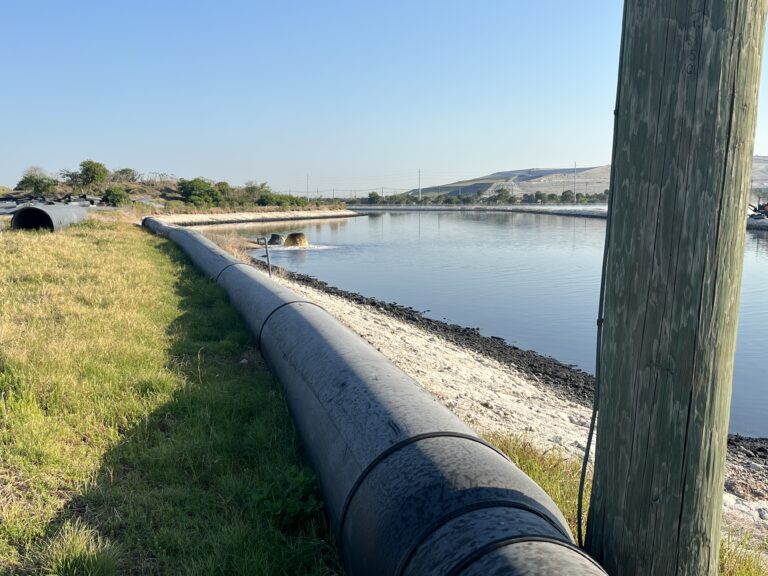
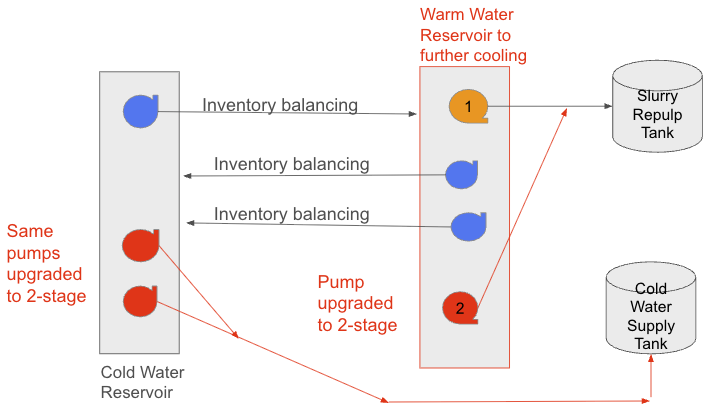
The Cold Water Intermediate Reservoir was removed from its original service and repurposed as part of the Warm Water Reservoir system. This modification released the existing intermediate reservoir discharge pump for reassignment as a standby pump for the slurry repulp water supply circuit.
Because the reassigned pump had a higher flow capacity, the modified arrangement also provided additional re-pulp water supply capacity to support equipment cleaning operations.
The two existing pumps previously transferring water from the Cold Water Reservoir to the Intermediate Reservoir were upgraded to two-stage pumps for direct service to the Cold Water Supply Tank. With only one pump required to meet normal operating demand, the second pump would serve as an installed standby unit.
This configuration established redundancy in both critical circuits while retaining the existing pumping infrastructure and minimizing piping modifications.
Figure 2 — Modified Utility Water Distribution Configuration
Coordination Efforts
Collaborated with the area supervisor to evaluate the existing utility water distribution system and develop a practical reconfiguration strategy. Coordinated with Operations and Capital Project teams to evaluate implementation requirements and ensure that the proposed modifications met plant operating, hydraulic performance, and reliability objectives.
Material and Energy Balances
Developed material and energy balances for the affected cooling water circuits to verify that the proposed system configuration could meet the plant’s utility water requirements.
Evaluated cooling water demand across individual plant users to establish the required flow rates and thermal loads. Separately assessed water demand at the slurry re-pulp tank, accounting for both normal re-pulping operations and additional equipment cleaning requirements.
These calculations established the design basis for evaluating the proposed pumping and distribution arrangements.
Hydraulic Modeling
Performed hydraulic evaluations using Excel and AFT Fathom to assess the proposed system reconfiguration, including pump operating conditions, required flow rates, and system hydraulic resistance.
The modeling supported the evaluation of the modified pumping arrangements and helped verify that the existing equipment could be adapted to meet the required operating conditions without purchasing additional pumps.
Project Results
The completed project established installed standby pumping capability for both the plant cold water supply and slurry re-pulp water supply circuits, significantly reducing the risk of production interruptions associated with individual pump failures.
Improved Operational Reliability: The slurry re-pulp water circuit gained standby pumping capability, mitigating the risk of a complete production shutdown associated with failure of its dedicated supply pump.
Reduced Production Loss Exposure: The cold water supply circuit gained redundancy, mitigating the risk of a potential 25–50% reduction in daily production during the warmer months of May through September.
Capital Cost Avoidance: Existing pumps were upgraded and repurposed rather than replaced with new equipment, avoiding significant capital expenditures associated with purchasing and installing additional pumps.
Minimal Infrastructure Modifications: Existing pumping infrastructure and piping were largely retained, with limited additional piping installed to accommodate the standby pumping arrangements.
Engineering Value
This project highlights my ability to apply process engineering principles to complex plant reliability challenges while balancing technical performance, operational requirements, and capital efficiency.
My engineering contributions included developing material and energy balances, performing hydraulic modeling using Excel and AFT Fathom, and evaluating the feasibility of repurposing existing pumping equipment within a modified utility water distribution system.
Through close collaboration with Operations and Capital Project teams, I helped translate these engineering evaluations into a practical system redesign that improved equipment redundancy and operational flexibility while minimizing infrastructure modifications and capital requirements.