Acid Transfer System Hydraulic Evaluation and Optimization
Root Cause Analysis of Pumping Capacity Limitations Using Hydraulic Modeling and Operating Data
Project Background
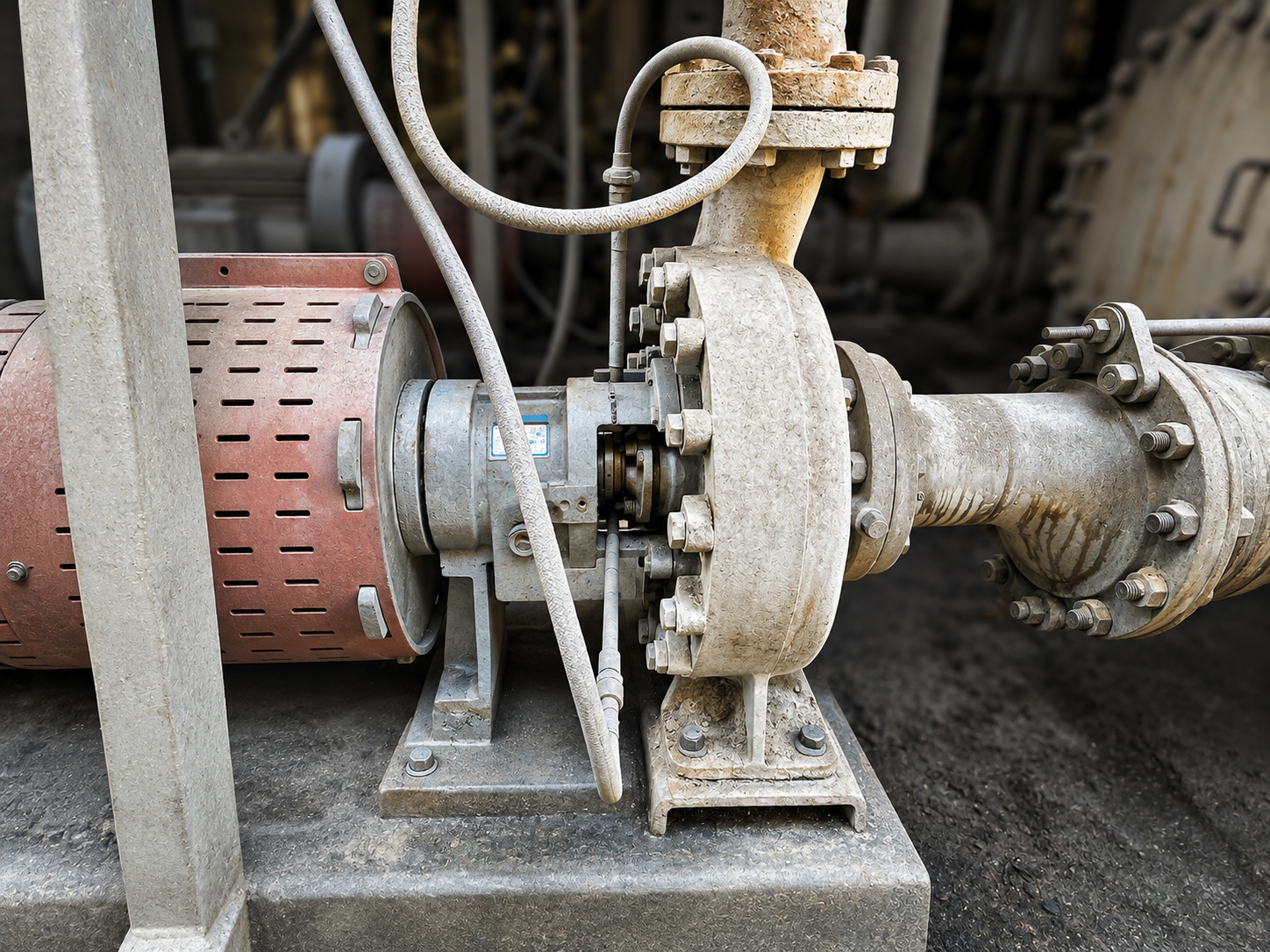
An industrial clarifier underflow acid slurry transfer system experienced flow limitations that prevented the existing pumping equipment from consistently achieving the required 100–250 GPM operating range. Two Discflo Model 402-14-2HHDL pumps served separate transfer routes. A higher-capacity replacement was under consideration, prompting a comprehensive hydraulic assessment.
Engineering Challenge
The evaluation sought to distinguish insufficient pump capacity from excessive system resistance. At high operating speeds, the existing equipment achieved approximately 214 GPM on Transfer Route A and 190 GPM on Transfer Route B. Both were below the desired maximum required flow of 250 GPM. Running both pumps also reduced standby availability and complicated line washing.
System Description
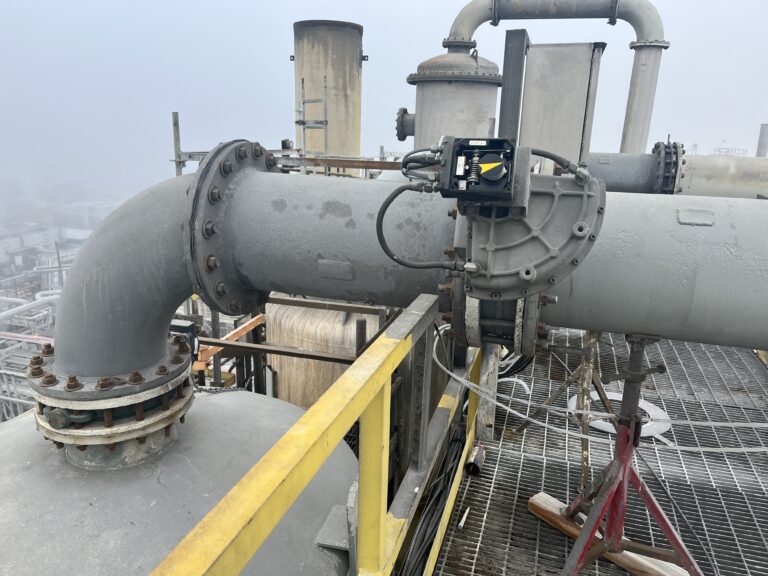
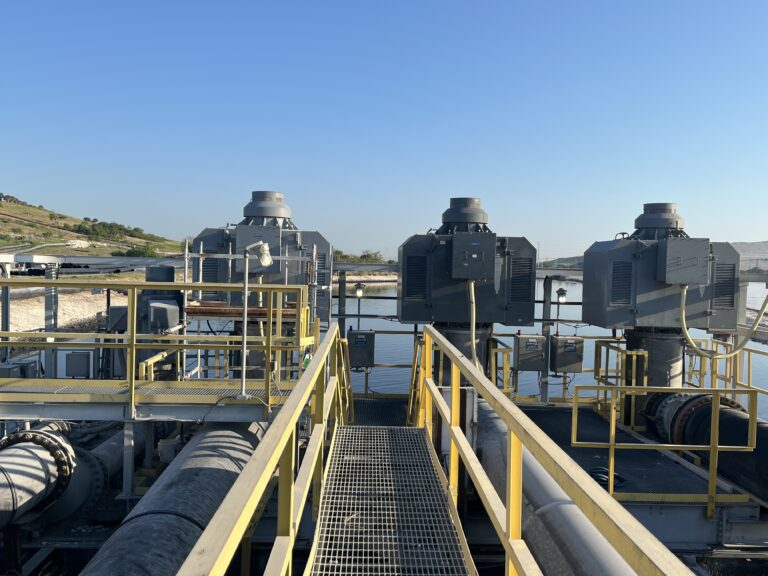
The system uses two parallel pumps and three nominal 4-inch transfer pipelines.
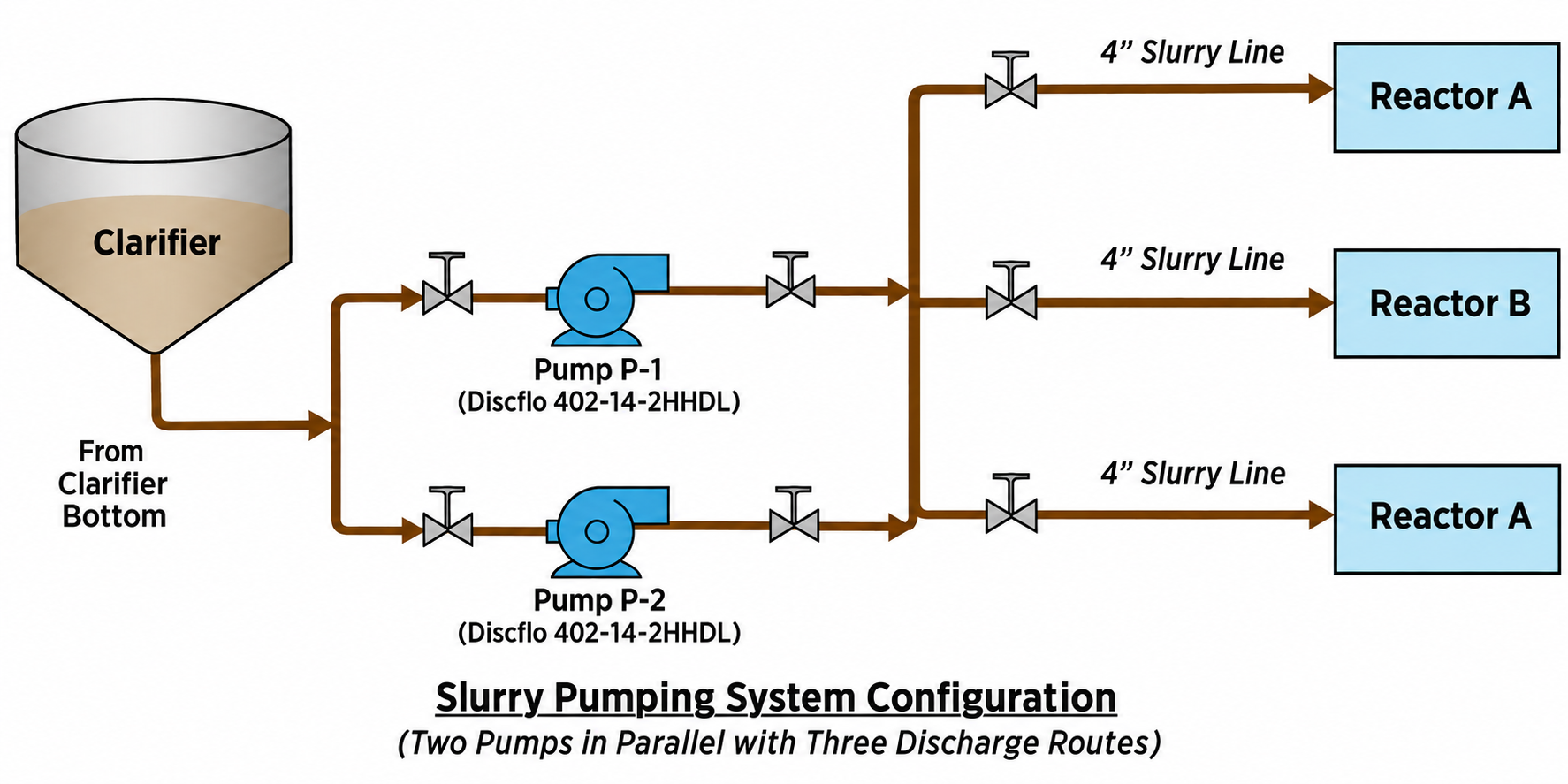
Figure 1. Slurry pumping system configuration showing two parallel pumps and three discharge routes serving Reactor A and Reactor B. Image to be inserted.
Engineering Analysis
Hydraulic Modeling and Operating Data Calibration
Theoretical clean-pipe system curves were developed for each transfer route. Historical pump speeds and measured flows were used to derive actual operating curves. Comparison revealed substantially higher head requirements in the operating system. Effective pipe diameter was adjusted in the hydraulic calculations to match observed performance. These inferred restrictions represent system-wide averages, not direct measurements of uniform deposit thickness.
Transfer Route A — Existing and Clean-Pipe Performance
The existing system reached approximately 214 GPM at 90% pump speed. Extrapolated head demand at 250 GPM was approximately 194 ft. The clean-pipe comparison demonstrates how elevated piping resistance limits available flow.
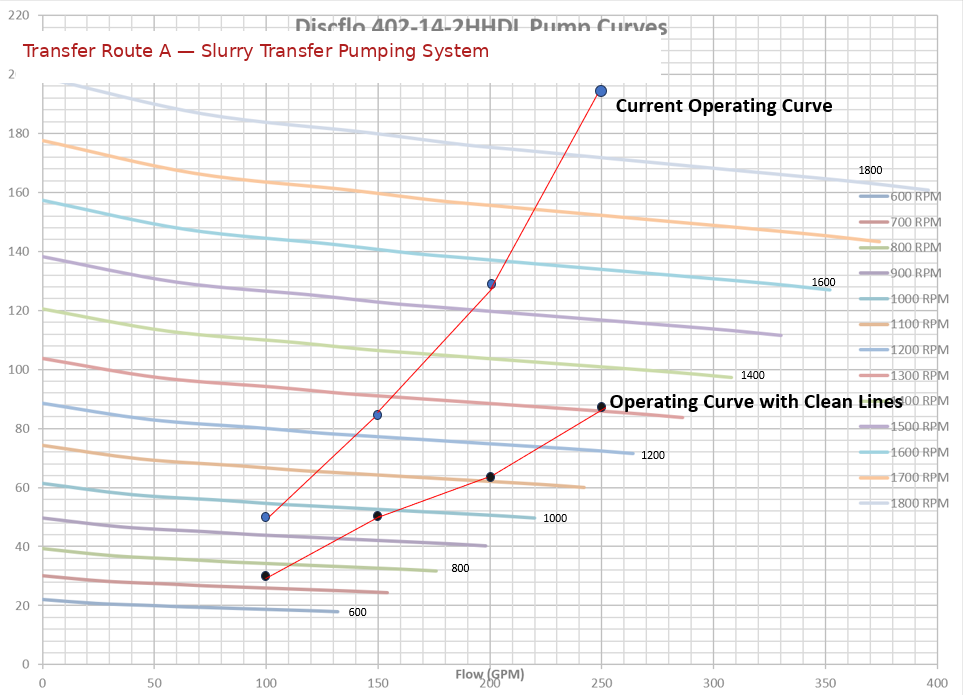
Figure 2. Transfer Route A — Existing Operating Curve Compared With Clean-Pipe Conditions.
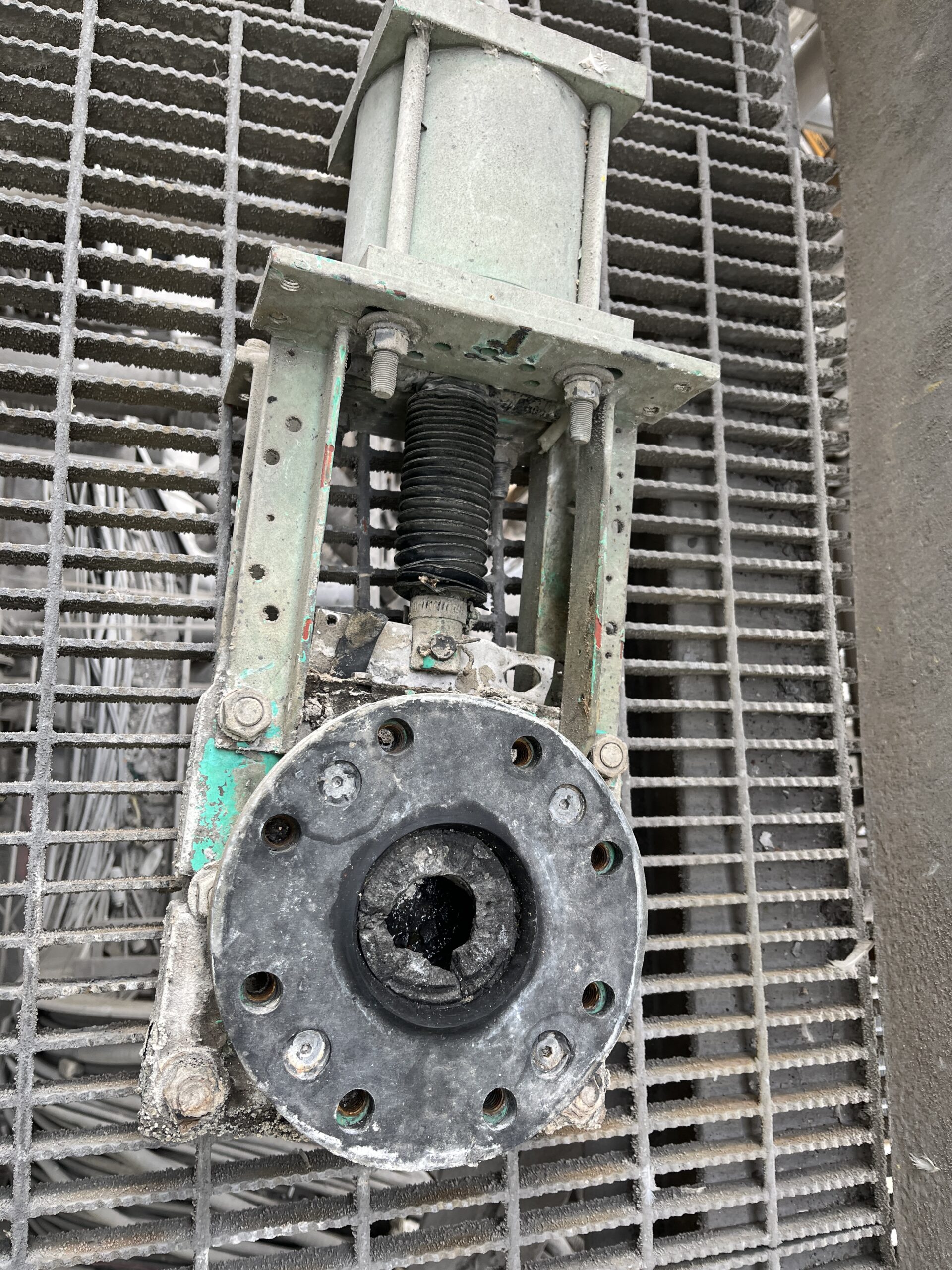
Transfer Route A — Piping Restriction Scenarios
Model calibration indicated an equivalent average internal diameter reduction of approximately 0.7 inches, corresponding to an average buildup of 0.35 inches per pipe wall. The modeled intermediate restriction scenario illustrates the hydraulic benefit of reducing buildup.
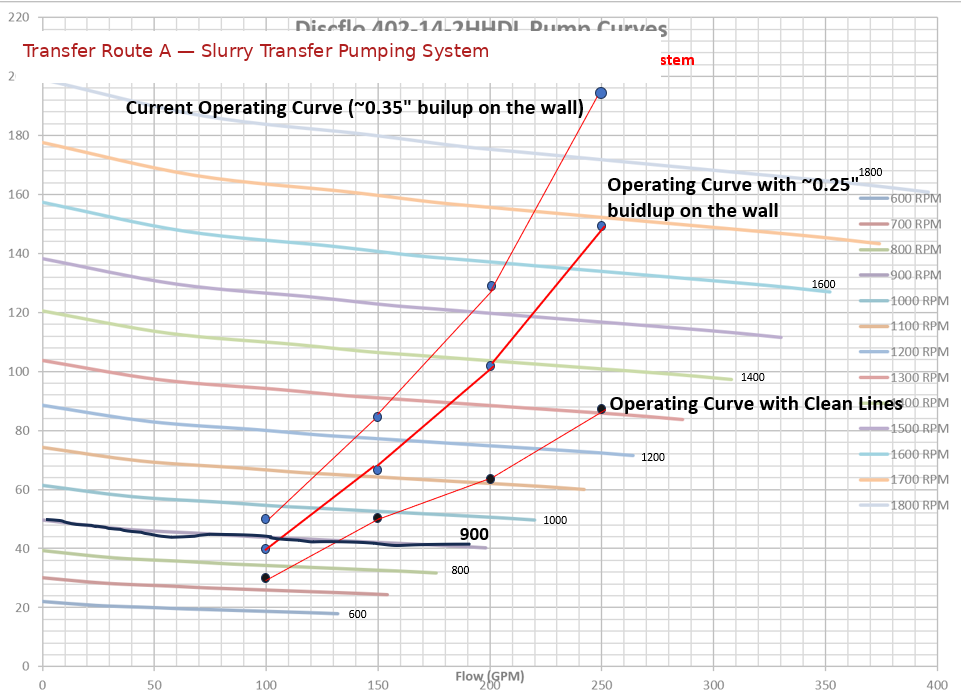
Figure 3. Transfer Route A — Effect of Internal Piping Buildup.
Transfer Route B — Existing and Clean-Pipe Performance
The existing system reached approximately 190 GPM at 95% pump speed. Extrapolated head demand at 250 GPM was approximately 235 ft. The actual system curve again showed substantially higher resistance than the theoretical clean-pipe case.
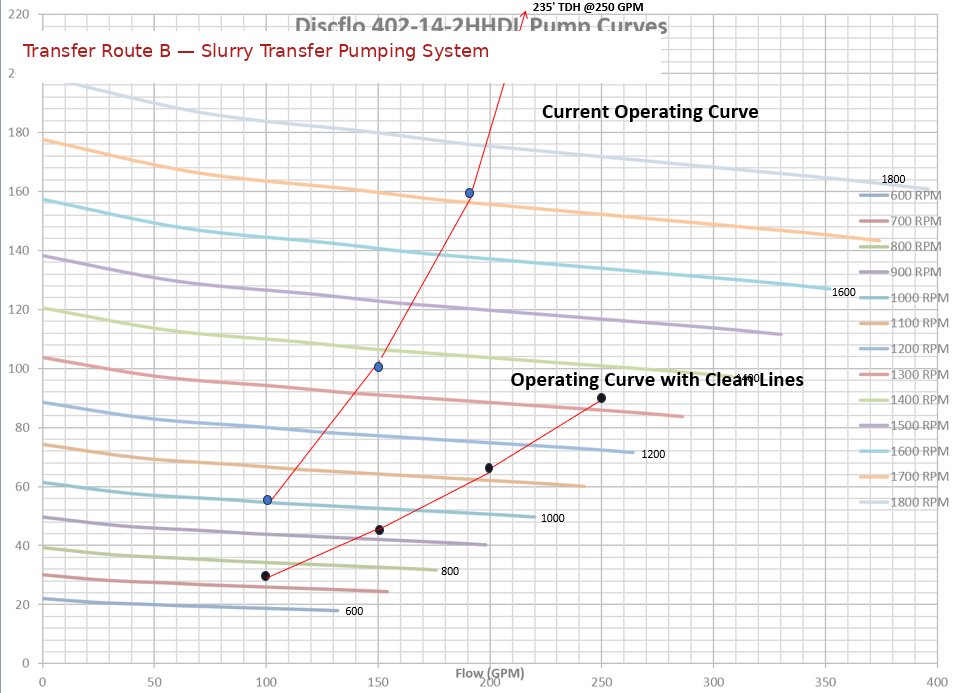
Figure 4. Transfer Route B — Existing Operating Curve Compared With Clean-Pipe Conditions.
Transfer Route B — Piping Restriction Scenarios
Model calibration indicated an equivalent average internal diameter reduction of approximately 0.8 inches, corresponding to an average buildup of 0.4 inches per pipe wall. Reducing these restrictions would lower system head requirements and improve attainable flow.
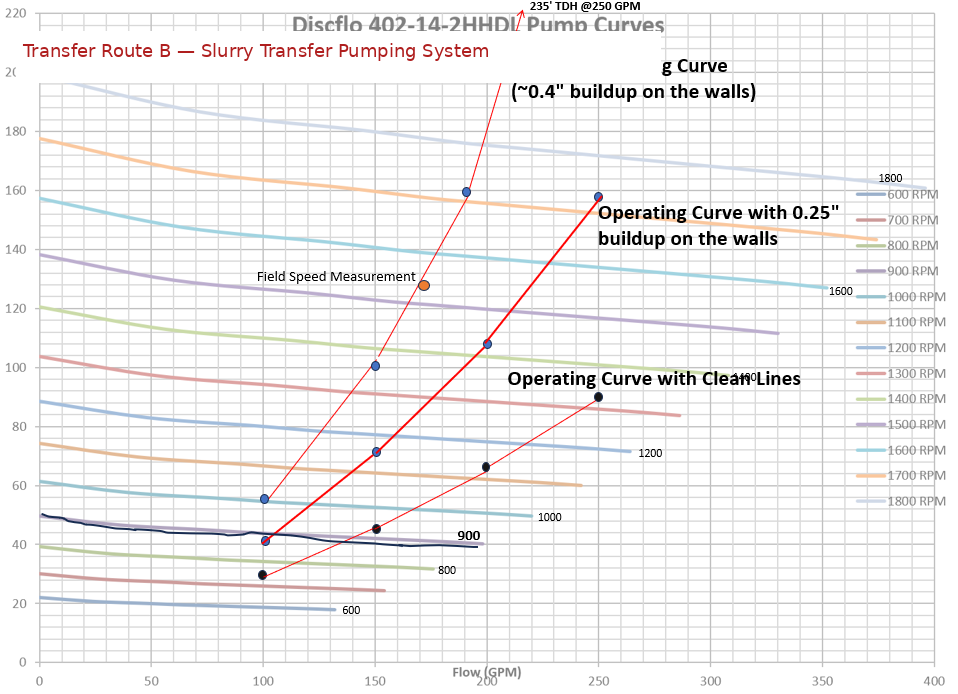
Figure 5. Transfer Route B — Effect of Internal Piping Buildup.
Pump Equipment Evaluation
Existing Discflo pump performance curves were compared against both actual and clean-pipe system curves using manufacturer information and pump affinity laws. The existing pumps were inadequate for the currently restricted system at 250 GPM but had substantially more capacity relative to the clean-pipe system.
The proposed Düchting MC 65-315B pump was also evaluated. Its available head of approximately 162 ft at 250 GPM was below the required 194 ft for Transfer Route A and 235 ft for Transfer Route B. Replacement with the proposed pump would therefore not resolve the flow limitation under existing piping conditions.
Key Findings
The hydraulic evaluation established that excessive piping resistance, consistent with internal scale and solids buildup, was the primary constraint. The effective diameter reductions inferred from calibrated models were approximately 0.7 inches on Transfer Route A and 0.8 inches on Transfer Route B. Both the existing and proposed pumps were constrained by the high system head requirements. Installing a larger pump without addressing the underlying piping restrictions would not provide a sustainable correction.
Engineering Recommendations
Based on the hydraulic evaluation, targeted cleaning or replacement of restricted piping sections was recommended rather than immediate pump upsizing. System improvements should be verified by monitoring achievable flow rates and pump operating speeds as piping rehabilitation progresses.
- Lower required total dynamic head.
- Increased achievable slurry transfer flow rates.
- Improved pumping flexibility.
- Reduced energy demand.
- Improved equipment reliability.
- Reduced pump operating speeds at equivalent flow rates.
- Avoidance of unnecessary equipment replacement expenditures.
These represent expected benefits of the recommended improvements rather than documented post-implementation results.
Capital Investment Considerations
The hydraulic evaluation supports prioritizing piping rehabilitation over installing a new transfer pump. This approach avoids the immediate capital expenditure associated with purchasing and installing a new pump, including its base or foundation, piping modifications, and associated installation work.
Additionally, piping replacement can be implemented in phases, allowing the facility to distribute capital expenditures over time while progressively addressing the hydraulic restrictions identified in the evaluation.
Project Outcome and Engineering Contribution
The completed engineering study established a technically supported basis for addressing the root cause of the slurry transfer limitations and evaluating alternative pumping equipment.
I independently performed the complete hydraulic evaluation, including hydraulic calculations and system curve development, historical operating data analysis, hydraulic model calibration, existing pump performance evaluation, proposed replacement pump assessment, estimation of internal piping restrictions, evaluation of alternative hydraulic operating scenarios, and development of engineering recommendations.
The evaluation demonstrated that restoring the hydraulic capacity of the existing piping system offered a more effective approach than replacing pumps without addressing the underlying restrictions. The study provided engineering recommendations for improving system performance, reliability, and operating efficiency.